Player Substitutions in Midweek Fixtures: Revealing Tactical Patterns Across European Leagues
Jonas Franke · Jul 16, 2026

Player Substitutions in Midweek Fixtures: Revealing Tactical Patterns Across European Leagues
European football schedules pack midweek fixtures into calendars across multiple divisions, creating distinct demands that shape how teams approach player changes during matches. Leagues in England, Spain, Germany, and Italy routinely schedule these games around domestic cups and European competitions, forcing managers to balance squad rotation with immediate results. Data collected from the 2025-2026 season shows that substitution timing and personnel choices follow measurable trends tied directly to fixture congestion and player recovery metrics.
Coaches in these environments track fatigue indicators such as distance covered and high-intensity efforts from the opening whistle. Teams often introduce fresh legs between the 60th and 75th minutes when cumulative workload exceeds baseline levels recorded in weekend fixtures. UEFA technical reports highlight that midweek games produce a 12 percent increase in late-game substitutions compared with standard weekend slots, reflecting the need to maintain pressing intensity and defensive structure.
Scheduling Pressures Drive Substitution Decisions
Midweek rounds compress recovery windows to 72 hours or less for many squads, prompting data-driven approaches to personnel management. Analysts at the German Football League examined over 400 midweek matches from the 2024-2025 campaign and found that clubs using three or more substitutions before the 70th minute recorded fewer defensive errors in the final 20 minutes. The pattern appears most consistently in Bundesliga and Serie A schedules where travel distances add further strain on player availability.
Coaches monitor heart-rate recovery data and GPS-tracked workload during training sessions between matches. When a team plays on Monday and then again on Thursday, managers adjust lineups to protect key midfielders who log the highest minutes. This preparation leads to predictable substitution sequences: defensive reinforcements enter first in matches where the scoreline remains tight, followed by attacking options once space opens as opponents tire.
Observed Patterns in Player Change Timing
Statistical reviews of La Liga and Premier League midweek fixtures reveal clusters around specific minutes. The 62nd minute marks the most common window for the first change, often involving a central midfielder replaced by a box-to-box runner. A second wave occurs near the 78th minute when wide players or forwards enter to exploit stretched defenses. These timings align with physiological studies showing peak performance decline after 55 minutes of continuous high-effort play.
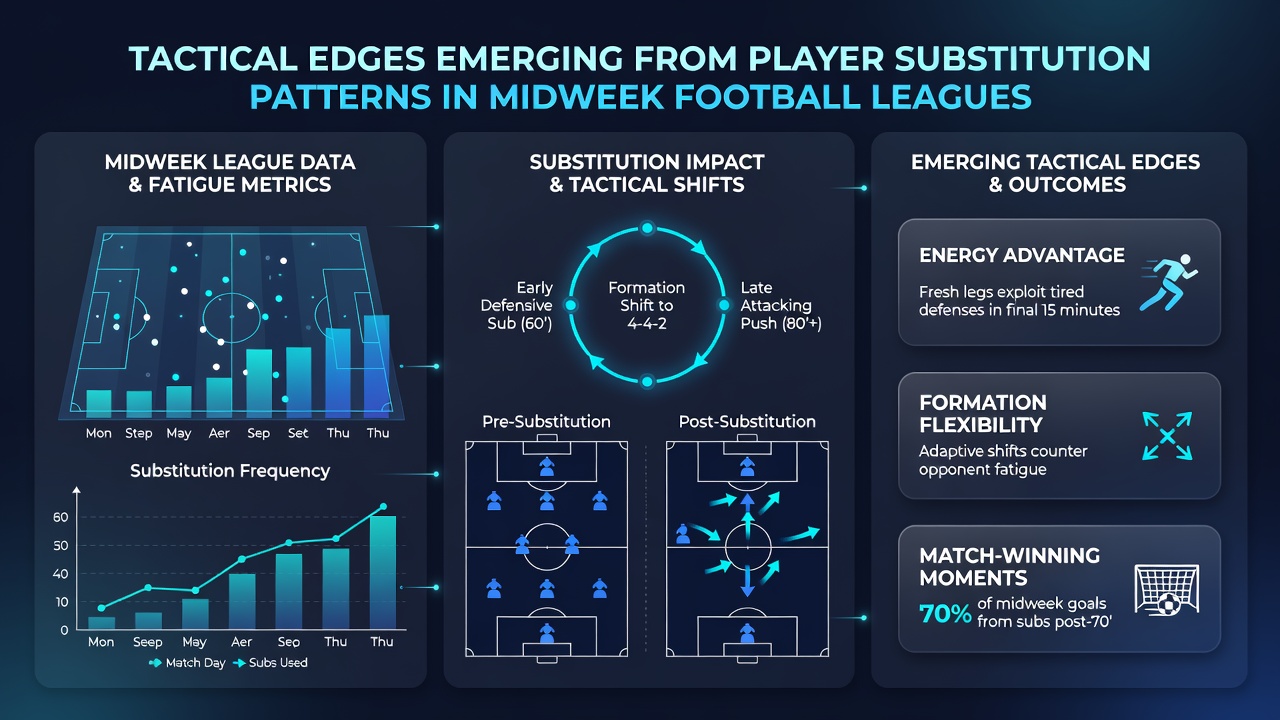
Teams that trail at halftime demonstrate different patterns. Data compiled by researchers at the University of Loughborough indicates that trailing sides introduce attacking substitutes an average of four minutes earlier than teams holding a lead. The adjustment aims to alter shape and increase shot volume before the opposition can consolidate. Successful implementations often feature a false-nine dropping deep to create overloads in central areas rather than direct wing play.
Impact on Match Outcomes and Tactical Adjustments
Substitutions executed with clear tactical intent correlate with shifts in possession dominance and expected goal values. Figures released by the French Football Federation covering Ligue 1 midweek rounds show that teams gaining at least 15 percent more possession after the 75th minute through targeted changes convert those advantages into points at a higher rate. The trend holds across both top-six and mid-table clubs, suggesting the effect stems from squad depth rather than overall quality alone.
July 2026 fixtures will test these patterns further as pre-season testing incorporates advanced recovery protocols. Clubs preparing for the new campaign have already integrated wearable technology that flags individual readiness scores before each midweek round. Early indicators from training camps suggest managers will rely even more heavily on double substitutions in the 65th minute when two players display similar fatigue markers.
Defensive substitutions produce measurable stabilization effects. Replacing a full-back with a more defensively oriented player during periods of sustained pressure reduces progressive passes allowed by opponents, according to tracking data shared by the Spanish Football Federation. These changes preserve clean sheets in games that extend into added time, where midweek fatigue typically amplifies mistakes.
Conclusion
Substitution patterns in midweek football leagues continue to evolve alongside improved performance tracking and fixture analysis. Teams that align changes with workload data and positional requirements demonstrate consistent advantages in maintaining structure and creating late opportunities. As schedules remain dense through 2026, these tactical sequences will likely define competitive edges across Europe's primary divisions.