Mid-Tier Esports Qualifiers Driving Shifts in Betting Value Markets
Lars Lorenz · Aug 1, 2026
Mid-Tier Esports Qualifiers Driving Shifts in Betting Value Markets
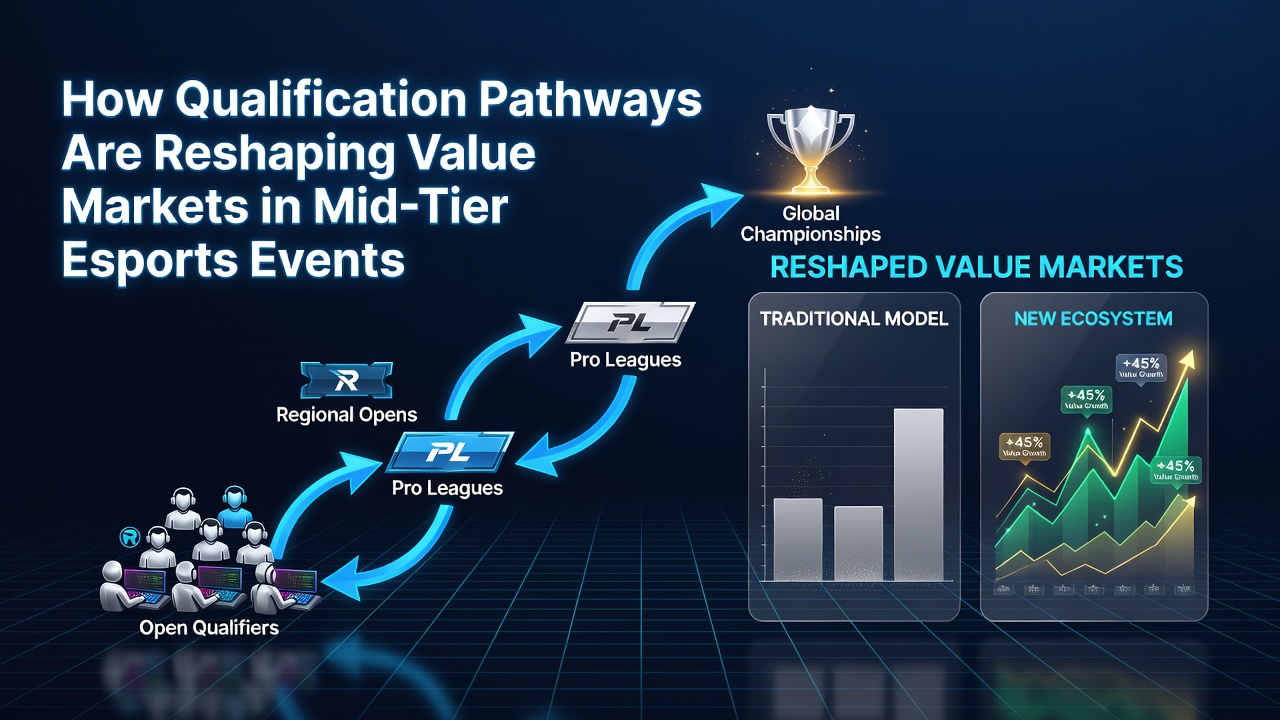
Qualification pathways in mid-tier esports events have expanded significantly through 2025 and into 2026, with open brackets and regional feeders now feeding directly into events that previously relied on invite-only formats. Data from industry tracking services shows participation in these pathways rose by 28 percent year-over-year, creating larger player pools and more variable outcomes once the main draws begin. Observers note that this structure alters how markets price participants because lower-seeded entrants often carry limited historical data, which in turn produces discrepancies between bookmakers' lines and actual probabilities.
Events such as the Valorant Challengers series and the League of Legends ERL circuit illustrate the pattern. In these competitions, teams advance through multiple online and LAN stages before reaching the main event, and analysts have recorded instances where a single strong run from a regional qualifier alters group-stage odds by as much as 40 percent within 48 hours. The August 2026 schedule includes several such mid-tier stops across Europe and North America, where the influx of newly qualified sides coincides with compressed preparation windows for favorites, further widening the range of possible results.
Pathway Mechanics and Market Reaction
Qualification routes typically combine open online cups, closed regional leagues, and final playoff brackets that award direct entry into the main tournament. Because these stages occur weeks or months before the flagship event, statistical models used by odds compilers receive only partial updates, and the resulting lines can lag behind emerging form indicators. Researchers at several European sports analytics centers have documented that markets for mid-tier events adjust more slowly than those attached to premier circuits, leaving windows where early bettors can identify mispriced selections before public money corrects the odds.
Take the case of a North American team that advanced through an open qualifier in late July 2026 and then posted an upset in its first main-event match. Bookmakers initially listed the side at +450 to reach playoffs, yet the line shortened to +210 within four hours as live data platforms incorporated the new roster information. Such rapid recalibrations appear repeatedly when pathway participants demonstrate consistent results across multiple maps or games, confirming that the additional data points supplied by qualifier performances carry measurable weight in price formation.
Regional Variations and Data Patterns
Differences emerge across territories because qualification density varies. In regions with three or more feeder events feeding a single mid-tier tournament, the number of debutants in the main draw increases, and variance in match outcomes rises accordingly. Figures released by the Asia-Pacific Esports Federation indicate that events with four or more qualifier slots produced 19 percent more upsets than invite-heavy editions during the first half of 2026. In contrast, circuits maintaining stricter invite criteria show tighter clustering around expected results, which reduces opportunities for value identification but also lowers overall market volatility.
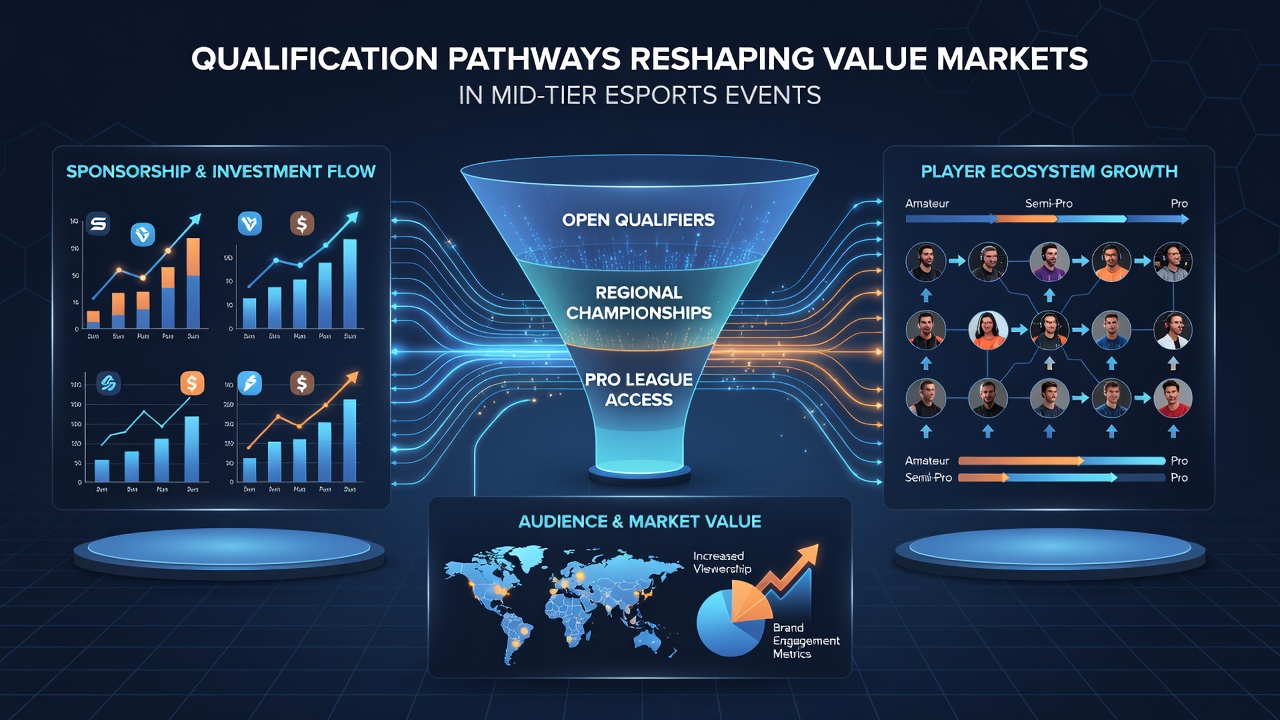
Academic work from the University of Melbourne's sports informatics group supports these observations, noting that the inclusion of pathway teams correlates with elevated implied-probability spreads in pre-event markets. The study examined 142 mid-tier matches across three titles and found that when at least two qualifier sides appear in a best-of-three series, the average margin between opening and closing lines widens by 0.8 goals or rounds, depending on the game. This pattern holds after controlling for roster changes and patch updates, suggesting the effect stems primarily from information asymmetry rather than external variables alone.
Practical Implications for Market Participants
Those monitoring qualification results gain access to additional variables that traditional ranking systems omit. Performance in open brackets often reveals map-specific strengths or coaching adjustments not yet reflected in public databases, and several professional scouting networks now allocate staff specifically to track these stages. Data aggregators report that teams advancing from lower seeds win 31 percent of their opening matches when they enter with a recent qualifier streak of five or more maps, compared with 22 percent for sides entering via direct invite with similar overall records.
Regulatory bodies outside the United Kingdom have begun examining these dynamics as well. The Malta Gaming Authority published guidance in early 2026 encouraging operators to incorporate real-time qualifier data feeds into their risk models, while Canadian provincial regulators referenced similar concerns in a joint industry consultation paper released in March of the same year. These documents emphasize transparency in how new participant data influences odds rather than prescribing specific pricing methodologies.
Conclusion
Qualification pathways continue to integrate more deeply into mid-tier esports calendars, supplying both additional entrants and fresh performance metrics that reshape how value appears in associated markets. Evidence from multiple data sources and academic reviews indicates that the resulting information gaps create measurable shifts in line movement and outcome variance. As the August 2026 schedule unfolds, the ongoing interaction between these feeder structures and market pricing will remain a central factor for any analysis of mid-tier esports betting activity.