Climate-Driven Weather Variations Transform Payout Dynamics in Golf and Tennis Markets
Jonas Franke · Aug 22, 2026
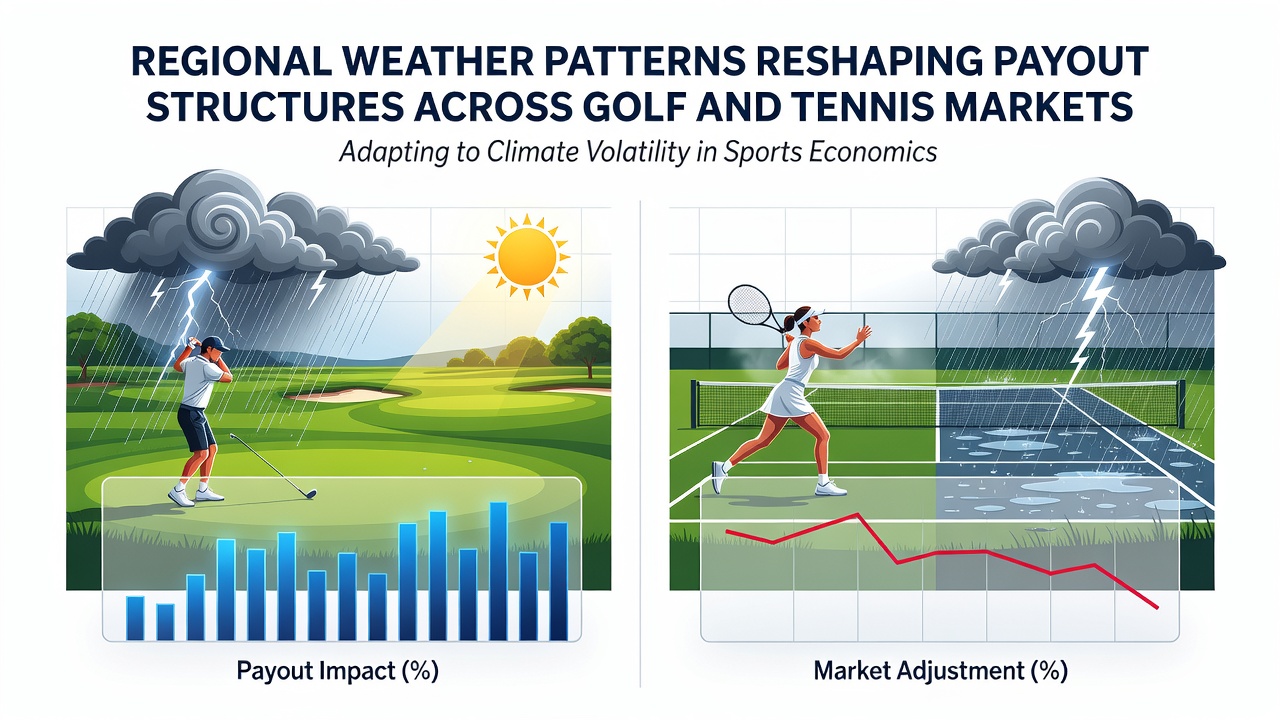
Climate-Driven Weather Variations Transform Payout Dynamics in Golf and Tennis Markets
Regional weather patterns have begun to influence betting payout structures across professional golf and tennis circuits with increasing frequency, and data from multiple monitoring agencies shows measurable shifts in how markets adjust odds when heat, precipitation, and wind patterns deviate from historical norms.
Weather Influences on Golf Performance Metrics
Observers tracking major golf events note that prolonged dry spells in certain North American regions have altered course firmness and green speeds, which in turn affects scoring averages and forces bookmakers to recalibrate payout thresholds for player props and tournament winners. Studies compiled by the National Oceanic and Atmospheric Administration indicate that elevated temperatures during summer months correlate with faster fairways, while increased humidity in southeastern states tends to slow ball roll and raise scores. Those adjustments appear directly in betting data, where over/under totals on total rounds drop by fractions of a stroke when forecasts predict sustained heat above seasonal averages.
Wind patterns present another variable that operators incorporate into live odds. Coastal venues experience gusts that push balls off line on exposed holes, and analysts have documented how these conditions reduce birdie opportunities, prompting earlier movement in match-play markets. European data from the European Environment Agency reveals similar trends in the British Isles, where shifting jet stream positions have produced more frequent crosswinds during late-summer opens, leading to wider spreads in three-ball betting groups.
Tennis Court Conditions and Match Duration Shifts
Tennis markets respond to weather through changes in rally length and match duration, particularly on outdoor hard and clay surfaces. Prolonged high temperatures in Australian and North African swing locations accelerate court surface wear, which increases unforced errors and shortens average point length. Industry reports from Tennis Australia show that when temperatures exceed 35 degrees Celsius for consecutive days, sets conclude faster on average, pushing totals markets lower in early rounds. Conversely, unexpected rainfall in Central European clay events extends match times because of slower ball speeds and more defensive play, expanding the window for live betting adjustments.

Humidity levels also factor into player fatigue models used by oddsmakers. Research published by the University of Queensland demonstrates that elevated dew points reduce serve effectiveness and increase double-fault rates, outcomes that directly feed into game and set handicap calculations. August 2026 schedules already reflect these considerations, with several North American hard-court events moving start times earlier to mitigate peak heat exposure, a scheduling change that has narrowed the variance in pre-match totals lines.
Betting Market Adaptations and Payout Recalibrations
Bookmakers operating across multiple jurisdictions have integrated regional weather forecasts into their pricing engines, resulting in more frequent mid-tournament line movements. Data aggregated by the Canadian Gaming Association indicates that weather-related adjustments now account for a measurable portion of odds revisions in both golf majors and ATP/WTA outdoor events. These revisions affect not only outright winner markets but also player-specific props such as aces, breaks, and fairways hit, where historical correlations with temperature and wind speed guide the size of limit adjustments.
Live betting volumes respond particularly strongly to sudden weather shifts. A single thunderstorm delay at a Florida swing event can pause play for hours, during which suspended markets see reduced liquidity until conditions stabilize. Operators respond by widening spreads temporarily and then tightening them once play resumes, a pattern confirmed in transaction records from multiple North American platforms. Similar dynamics occur at European clay events when morning fog delays start times, pushing afternoon totals lines lower once cooler, slower conditions set in.
Geographic Variations and Future Scheduling
Regional differences create distinct payout profiles. Desert tournaments in the southwestern United States contend with extreme daytime heat followed by rapid evening cooling, which produces two distinct scoring windows within a single round. Asian swing events face monsoon-related humidity spikes that extend rally lengths on slower surfaces. Australian Open organizers have published scheduling adjustments for 2026 that incorporate updated heat policies, shifting evening sessions earlier when forecasts indicate elevated overnight dew points. These changes feed directly into pre-event totals modeling used by pricing teams.
Academic studies from the University of British Columbia further link long-term climate trends to altered precipitation distributions, which affect clay-court maintenance schedules and hard-court expansion rates. Operators monitoring these patterns adjust their risk models accordingly, widening certain prop ranges in advance of known seasonal anomalies.
Conclusion
Regional weather patterns continue to reshape payout structures through direct effects on scoring, rally length, and scheduling decisions across golf and tennis. Data from government agencies, industry associations, and academic sources shows consistent correlations between meteorological variables and market movements, with operators incorporating these inputs into both pre-match and live pricing frameworks. As schedules for August 2026 and beyond reflect updated environmental considerations, betting markets maintain their responsiveness to these evolving conditions.