Black Market Betting Projections Highlight Potential Impacts of Upcoming UK Regulatory Changes
Rosa Sullivan · May 28, 2026

Black Market Betting Projections Highlight Potential Impacts of Upcoming UK Regulatory Changes
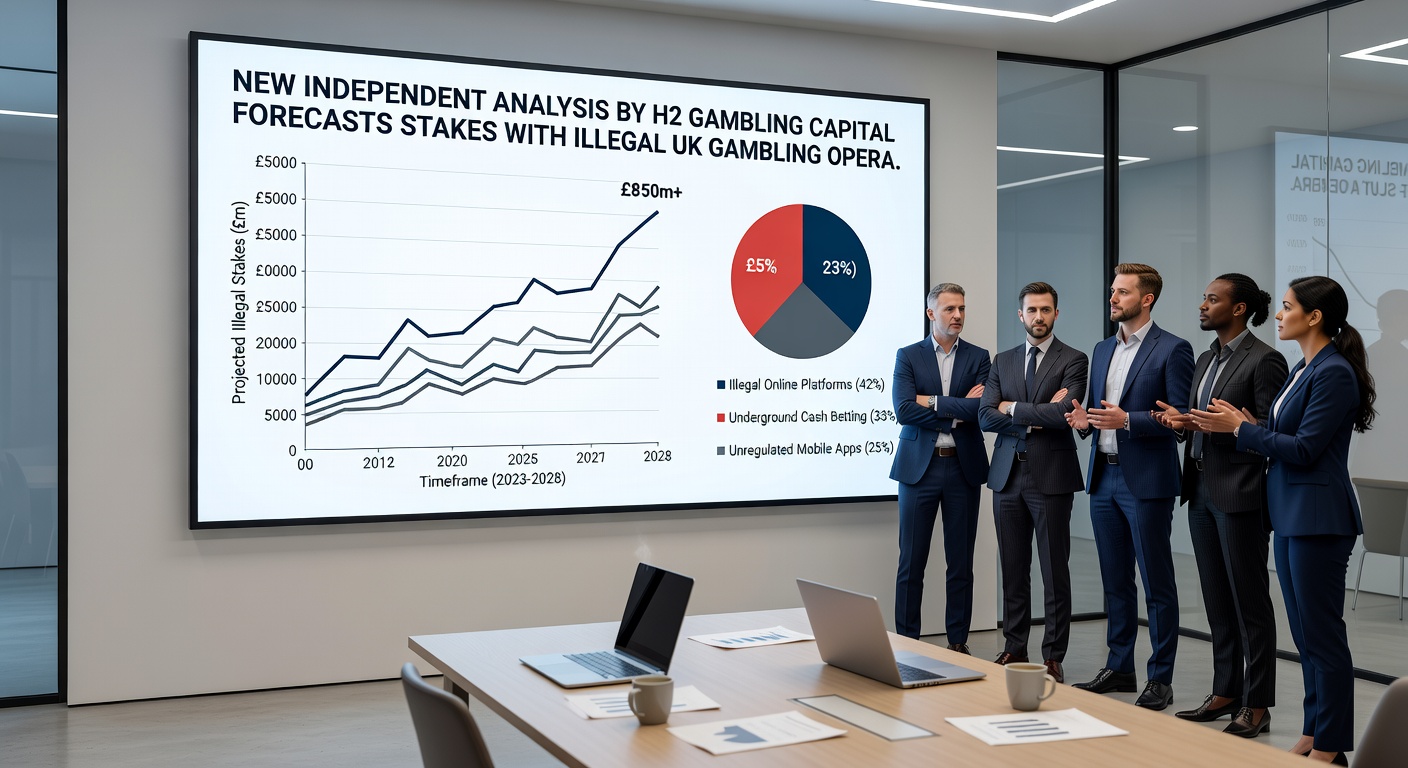
Independent forecasts from H2 Gambling Capital indicate that stakes placed with illegal UK gambling operators could nearly double, rising from £17 billion in 2025 to more than £33 billion by 2028, which would represent 19.2% of all online betting and gaming stakes in the country. The Betting and Gaming Council released details of this analysis while highlighting concerns over decisions expected from the Gambling Commission regarding financial risk assessments, higher taxes, and additional regulatory measures.
Those figures emerge at a time when discussions around tighter controls continue to shape industry responses, and observers note that such projections factor in scenarios where stricter rules might redirect activity toward unregulated platforms. The Betting and Gaming Council points to the absence of player protections and tax contributions on black-market sites as key elements in its statements, drawing directly from the H2 Gambling Capital data to illustrate potential shifts in consumer behavior.
Details Behind the Forecast Numbers
According to the analysis, the projected increase would see illegal stakes account for nearly one-fifth of the total online market by the end of the forecast period, a development tied to the combined effects of financial risk assessments, tax adjustments, and rule changes under consideration. Researchers involved in the modeling examined current trends in licensed versus unlicensed activity, producing estimates that reflect how regulatory pressures might accelerate movement away from regulated operators.
Data shows the starting point of £17 billion in 2025 already represents a significant portion of overall stakes, while the jump to over £33 billion by 2028 aligns with assumptions about customer migration patterns observed in other jurisdictions facing similar policy shifts. The 19.2% share emerges from calculations that incorporate both volume growth in the illegal sector and relative changes across the broader market, providing a quantitative basis for the warnings issued by the Betting and Gaming Council.
Context of Regulatory Decisions Under Review
The Betting and Gaming Council issued its statements specifically in relation to upcoming Gambling Commission actions on financial risk assessments, higher taxes, and tighter rules, arguing that these measures could influence where customers place their bets. Financial risk assessments involve checks that operators must perform to evaluate a customer's ability to sustain gambling activity, while tax considerations include potential increases in duties applied to licensed betting and gaming activities.
Tighter rules encompass a range of possible restrictions, from deposit limits to enhanced verification processes, all of which remain under active review as of May 2026. The council's position connects these elements to the H2 Gambling Capital projections, noting that unregulated sites operate without the same obligations and therefore may appear more attractive under certain conditions. Figures from the forecast illustrate how even modest percentages of customer movement could compound into the larger stake totals outlined for 2028.
Those who've examined similar regulatory transitions elsewhere point out that enforcement challenges often accompany efforts to curb black-market activity, and the current projections incorporate variables around compliance costs and customer preferences. The analysis does not claim direct causation but presents scenarios where the combined weight of financial risk assessments, tax increases, and new rules correlates with elevated illegal market shares.
Implications for Player Protections and Tax Contributions
Regulated operators in the UK contribute to tax revenues and maintain standards for player protections that include self-exclusion tools, age verification, and responsible gambling features, whereas illegal sites provide none of these mechanisms according to the Betting and Gaming Council. The forecast indicates that if stakes shift toward unregulated platforms at the projected rate, the resulting gap in tax contributions could reach substantial levels by 2028, based on the £33 billion figure.
Evidence from the H2 Gambling Capital report, as presented by the council, underscores the difference in oversight between licensed and unlicensed environments, with the latter offering no mandatory safeguards or revenue reporting. Observers note that this distinction forms a central part of the arguments advanced in connection with the upcoming commission decisions, where the balance between consumer safeguards and market dynamics continues to receive attention.
Market Share Calculations and Growth Assumptions
The 19.2% projection derives from models that track both absolute growth in illegal stakes and the proportion relative to total online activity, incorporating data on current licensed market volumes. By 2028 the illegal segment could exceed one in five pounds wagered online if the trajectory holds, a threshold that the Betting and Gaming Council links to the anticipated effects of financial risk assessments and related policies.
Calculations also factor in potential revenue losses for the licensed sector, which in turn affects the tax base since only regulated operators remit duties to the government. The analysis remains focused on online betting and gaming stakes, leaving offline channels outside the primary scope of the forecast released in this context.
Conclusion
The H2 Gambling Capital forecast, as communicated through the Betting and Gaming Council, supplies specific numbers on illegal market expansion alongside references to pending regulatory steps involving financial risk assessments, higher taxes, and tighter rules. These elements together form the basis for discussions about how customer behavior might evolve between 2025 and 2028, with the 19.2% share serving as a key benchmark in the presented data. Further details appear on the Betting and Gaming Council site, where the full context of the projections receives additional explanation.